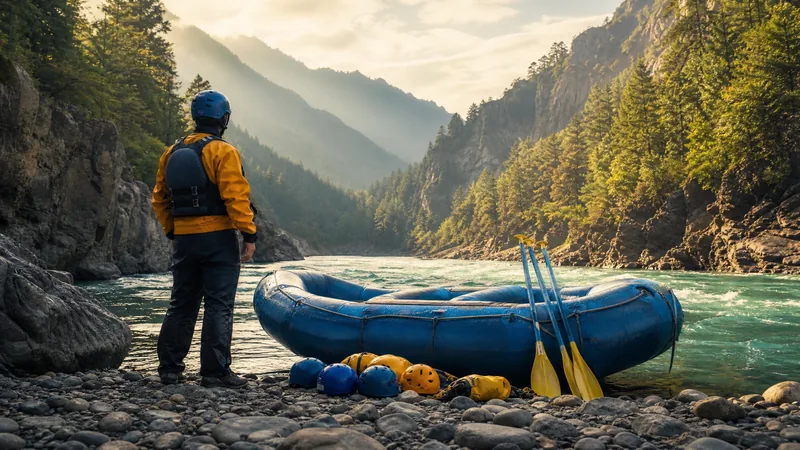
How to Start a Hunting or Fishing Guide Business in West Virginia: DNR General Outfitter and Guide Licence
How to Start a Hunting or Fishing Guide Business in West Virginia: DNR General Outfitter and Guide Licence
If you want to take paying clients hunting or fishing in West Virginia, the core permission you need is the general outfitter and guide license from the Division of Natural Resources (DNR). It is the license most people mean when they search for a west virginia fishing guide license or a west virginia hunting guide license. The state license itself is mostly paperwork: a $10 fee, a $1,000 surety bond, proof of liability insurance, a first aid certification card, and a Boater Education Certificate if you run motorized boat trips and qualify for one. The harder part is setting up the business around it, because West Virginia has no general statewide business license, and city and county rules vary. This guide covers the order we would tackle it in.
This article is informational, not legal or tax advice. Fees and rules change, so confirm each one with the agency named before you spend money.
What the DNR License Covers
The general outfitter and guide license is issued by DNR Law Enforcement under West Virginia Code 20-2-23 through 20-2-26. A few points shape everything else:
- Fee: $10.
- Term: The license is good for the calendar year printed on it (20-2-26). Plan to renew every year.
- Carry it: A guide or outfitter must have the license with them while working. Acting without one is a misdemeanor, with a fine of up to $100 or up to 90 days in jail.
- Separate from whitewater: If you run whitewater trips, that is a separate license. Holding the general outfitter and guide license does not cover it.
- Federal land: The U.S. Forest Service requires the DNR license before it will issue a National Forest permit. No DNR license, no federal permit.
Materials and Documents You Need
Gather these before you start filling out forms. Several of them depend on each other, so the order matters.
- Your legal name, business address, and a decision on structure: sole proprietorship or LLC
- The business name you plan to use, checked against the Secretary of State business search
- A $30 Business Registration Certificate from the State Tax Division (Form WV/BUS-APP, or online at business4.wv.gov)
- If you form an LLC: Articles of Organization (Form LLD-1), $100
- Proof of liability insurance
- The insurance and bond information form
- A current first aid certification card
- A $1,000 surety bond payable to the State of West Virginia
- A Boater Education Certificate, if you run motorized boat trips and were born after December 31, 1986 (holders of a federal commercial boater license are exempt)
- The $10 license fee
Step 1: Choose Your Legal Structure and Name
Your structure decides which filings you make. A sole proprietorship needs no Secretary of State filing to exist, but if you operate under a name other than your own, you need a trade name registration (DBA). For individuals and sole proprietors, a DBA on Form TN-1 has no filing fee.
An LLC is formed by filing Articles of Organization (Form LLD-1) with the Secretary of State for $100, with a $1.00 processing fee if you file through the One Stop Business Portal. Use these name rules:
- The name must include "limited liability company," "limited company," or an accepted abbreviation such as "LLC" or "L.L.C." (WV Code 31B-1-105).
- The name must be distinguishable from every other name already registered or reserved with the Secretary of State.
- A name reservation costs $15 and holds the name for 120 days.
An LLC also carries a recurring obligation. The annual report costs $25 and is filed between January 1 and June 30 each year after the registration year. A filing after June 30 costs $75 because of a $50 late fee. West Virginia does not require a separate commercial registered agent. The LLD-1 asks for an agent "if any," and the Secretary of State can accept service of process for your company. Many owners still name an individual or service so they receive it directly.
If you operate under a trade name as an LLC, the DBA is filed on Form NR-3 with a $25 fee, plus the $1.00 online processing fee.
Reference: West Virginia Secretary of State business services. Name search is at apps.sos.wv.gov.
Step 2: Register With the State Tax Division
West Virginia has no general statewide business license, so do not look for one. The closest requirement is the Business Registration Certificate from the State Tax Division. It is a $30 one-time fee, the certificate is permanent until your business name, location, or ownership changes, and a separate certificate is required for each fixed business location. Filing with the Secretary of State does not replace it, and it does not replace the DNR license.
Register at tax.wv.gov or through business4.wv.gov. Ask the Tax Division how it handles a business with no fixed location, since many guides operate out of a home office, a truck, or a launch point they do not own. Confirm that answer in writing if your setup is unusual.
Step 3: Check City and County Rules
West Virginia has 55 counties and 230 incorporated places (towns, cities, and villages). Local rules are where guides get surprised. Cities levy the gross receipts business and occupation (B&O) tax that applies to shops, contractors, and service businesses. The state B&O tax applies only to utilities. Cities also license businesses and may charge a weekly per-worker city service fee. A total of 101 municipalities add a 1% city sales tax to the 6% state rate, and that number rises to 107 from January 1, 2027.
Whether any of these apply to your guide business depends on where you are based and where you operate. Call the city clerk or county office where you will work, and ask specifically about business license, B&O, and service fees for a business like yours. Check with the Tax Division on how the state sales tax applies to the services you sell.
Step 4: Buy Liability Insurance and Get First Aid Certified
The application requires proof of liability insurance and an insurance and bond information form. This guide does not state a minimum coverage amount, so ask DNR Law Enforcement what limits the application expects before you buy a policy. Then ask an insurer that writes outfitter and guide coverage what it costs and what it covers. Some carriers want to see the license before issuing the policy, and others want the policy before the license issues. Ask both sides which order works.
The first aid certification card is also required. Get a current card before you apply, and keep a copy with your records.
Step 5: Get the $1,000 Surety Bond
Before you offer any services, you must execute a $1,000 surety bond payable to the State. The bond must be approved as to form by the Attorney General and as to surety by the DNR Director. Ask a surety agent for a quote on the premium. This guide does not state a premium figure, and it varies by applicant. Make sure the bond form matches the State's wording and that the surety company is one DNR will accept. Ask DNR whether the approved bond must be on file before the license is issued.
Step 6: Complete Boater Education If You Run Boats
If you operate motorized boat trips and were born after December 31, 1986, you need a Boater Education Certificate. Holders of a federal commercial boater license are exempt. Confirm the course and any fees with DNR, since this guide does not list them.
Step 7: Submit the Application to DNR Law Enforcement
Assemble the application package: the completed license application, proof of liability insurance, the insurance and bond information form, the first aid card, and the Boater Education Certificate if it applies. Include the $10 fee. Check with DNR Law Enforcement for the current application form and submission method before you send anything, because forms get revised.
Keep a complete copy of everything you submit. If DNR asks for a correction, you will know exactly what was filed.
Step 8: Get the National Forest Permit, If You Need One
If your trips cross U.S. Forest Service land, the DNR license comes first. The Forest Service will not issue a National Forest permit until it sees your DNR license. Apply for the permit only after your state license is issued, and ask the local Forest Service office what else it requires.
Step 9: Carry the License and Renew Every Year
Because the license covers only the calendar year printed on it, set a renewal reminder well before the new year. Confirm the renewal deadline and process with DNR, because this guide does not state a renewal date. Carry the license on every trip, and make sure any assistants or clients know what it covers.
Tips for Getting It Right
- Sequence the filings. Form the entity and clear the name first, then register with the Tax Division, then apply to DNR. Your business name appears on several of these documents.
- Ask DNR the open questions in writing. Get answers about insurance limits, bond timing, Boater Education, and renewal before you build your schedule around them.
- Use free help. The West Virginia Small Business Development Center can review your plan and your filings at no cost.
- Check what your clients must carry. Hunting and fishing licenses for your clients are their responsibility, but your intake process should tell them what they need.
- Keep one folder with every expiration date. The license, the bond, the insurance, the first aid card, the Business Registration Certificate, and the LLC annual report all expire or renew on different schedules.
Common Mistakes to Avoid
- Treating the Business Registration Certificate as the license. The $30 certificate is a Tax Division registration. It does not authorize guiding.
- Treating the Secretary of State filing as a license. Forming an LLC makes your company exist on paper. It does not give you permission to guide.
- Taking bookings before the bond is executed. The bond must be in place before you offer services, so do not sell trips in advance of the approval.
- Assuming there is no local tax. City B&O, city business licenses, and service fees can apply even though the state has no general business license.
- Missing the June 30 annual report. An LLC that files late pays $75 instead of $25.
- Forgetting the whitewater license. The general outfitter and guide license does not cover whitewater trips.
- Letting the license lapse at year end. A license is for one calendar year, and working on an expired license is a misdemeanor.
- Skipping the Forest Service step. If you plan to guide on National Forest land, the federal permit depends on your DNR license.
- Using a name that fails the LLC rules. A name without an accepted LLC designation or one too close to an existing name can delay your filing.
What Results to Expect
Working through these steps in order gives you the state license, the bond, and the registrations most guides need to start operating legally. Timing depends on how quickly your insurer, surety, and DNR process their parts, so build in slack before your first booked trip. Many new guides find that the insurance and bond steps take longer than the filings themselves. Plan around that rather than around the $10 fee.
The license does not guarantee bookings or income. It is the legal starting point. Marketing, pricing, and client service decide how many trips you run.
Cost Summary
| Item | Amount | Where to confirm |
|---|---|---|
| DNR general outfitter and guide license | $10 | DNR Law Enforcement |
| Surety bond | $1,000 bond, premium varies | Surety agent |
| Business Registration Certificate | $30, permanent per fixed location | State Tax Division |
| LLC Articles of Organization (Form LLD-1) | $100, plus $1.00 if filed online | Secretary of State |
| LLC annual report | $25 each year, due June 30; $75 if filed late | Secretary of State |
| Sole proprietor DBA (Form TN-1) | No filing fee | Secretary of State |
| LLC DBA (Form NR-3) | $25, plus $1.00 if filed online | Secretary of State |
| Name reservation | $15, holds name for 120 days | Secretary of State |
| Liability insurance | Not stated here | Insurer and DNR |
| Boater Education Certificate | Not stated here | DNR |
| Whitewater license | Separate, not stated here | DNR |
| City business license, B&O, and service fees | Set by each city | City clerk |
Next Steps
Start with the questions only DNR can answer: insurance limits, bond timing, Boater Education, and renewal. Ask them in writing while you form your entity. Then register the business, apply to DNR, and calendar every renewal date the day the license is issued.
Disclaimer: This article is general, informational content about forming a business in West Virginia. It is not legal, tax, or insurance advice. Requirements, fees, and deadlines change, and the agencies named here set the final rules. For a complex situation, such as a multi-owner company, a business with several locations, or trips that cross state lines, consult a qualified attorney and a certified public accountant before you file or sign anything.
Keep exploring: related West Virginia guides
- How to Start a Hemp Farm or Processor in West Virginia
- How to Start a Logging or Timber Business in West Virginia
- How to Start a Campground or RV Park in West Virginia
- How to Start a Whitewater Rafting Company in West Virginia
- How to Start an LLC in West Virginia
- West Virginia Business License
- How Much Does It Cost to Start a Business in West Virginia
- All West Virginia business types
- Every West Virginia guide in one place